
The Role Of Pharmacists Is To Enhance The Safety And Efficiency Of Prescription Refills Through Medication Review, Checking For Interactions, Verification Of Prescriptions, Coordination With Providers, And Patient Education.
Refills look easy at first glance since one only needs to request the same and go ahead. However, in practice, there are issues that may arise from refilling, such as the safety of patients, adherence, and ultimately their outcomes. Failure to request a refill in time will lead to delay, which can lead to a therapy gap; giving the wrong dose may have some side effects, while ignoring interactions may lead to complications. This is what makes the process not just about convenience but also consistency.
Pharmacists have an important part to play in ensuring that the refills are not only accurate but also consistent and safe as well. With Refill pharmacy in Jacksonville, this process becomes smoother and safer through the behind-the-scenes work. The best Refill pharmacy in Jacksonville teams don’t just “fill bottles”; they help prevent errors, reduce delays, and keep patients on track.
In this blog, we’ll walk through the key roles pharmacists play during the refill process, and how their work supports the pharmacy services Jacksonville patients rely on every day.
Prescription Review: The First Safety Checkpoint Pharmacists Perform
Before a refill is processed, pharmacists often review prescription history to confirm timing and appropriateness.
What they’re checking:
- Does the refill timing make sense based on the last fill date?
- Is the refill appropriate for the treatment plan and dose?
- Are there potential drug interactions or patient-specific risks?
This review helps prevent early refills that may not be allowed, late refills that may cause gaps, and refills that don’t match the current therapy plan. It’s a core part of safer pharmacy services Jacksonville patients depend on, especially for chronic conditions.
Verification and Authorization of Refill Orders
Refills aren’t always “automatic.” Sometimes the pharmacy needs prescriber approval, updated directions, or clarification.
Pharmacists help by:
- Double-checking medication name, strength, directions, and quantity
- Preventing mix-ups and dispensing errors
- Communicating with prescribers to request refill approvals when needed
- Protecting continuity so patients don’t experience therapy interruptions
This is one of the biggest ways pharmacists streamline refills: they reduce the back-and-forth that patients would otherwise have to manage themselves.
Accuracy and Safety Checks Before Dispensing
Even when a refill seems straightforward, pharmacists run safety checks to prevent avoidable harm.
They often review for:
- Allergies
- Interactions
- Duplicate therapies
- Contraindications
- Safe dosing and appropriate use
Detecting problems early helps avoid adverse drug reactions. This is one of the primary reasons why pharmacist-driven processes are important since they safeguard patients even before medications are dispensed.
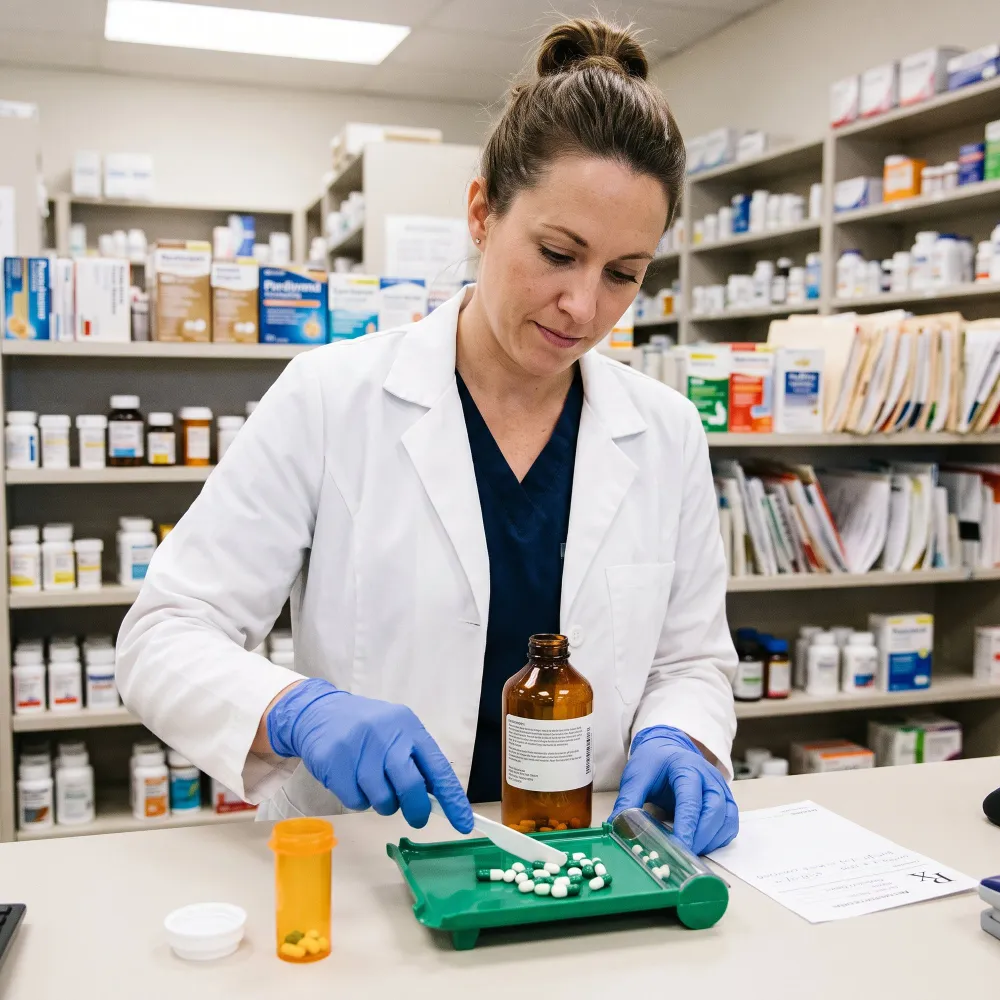
Medication Preparation: Ensuring the Right Medication Is Dispensed Correctly
Medication preparation involves strict protocols designed to reduce human error.
This can include:
- Measuring, counting, and labeling with standardized processes
- Using tools and systems that reduce mix-ups
- Final verification before medication is released to the patient
That final verification step is critical. It’s the last “quality control” moment before the medication reaches the patient’s hands.
Using Technology Efficiently To Streamline and Improve Refill Workflows
Technology doesn’t replace pharmacists; it supports them.
Automated systems and electronic records can help with:
- Tracking refill requests
- Inventory management and stock planning
- Faster verification and documentation
- Communication with healthcare providers
When used well, technology helps reduce errors, speed up service, and keep refill workflows organized, especially during busy hours.
Patient Education and Medication Management During the Refill Process
One of the most important aspects of refills is the opportunity for asking questions. The pharmacist is an expert on medications, and the refill process gives patients a good opportunity to ask for more information.
The pharmacist can educate patients on how to use medications properly, including proper timing, whether a medication should be taken with food, what to do in case of a missed dose, what side effects to expect, and whether there are any potential drug interactions.
Collaboration with Healthcare Providers to Support Ongoing Care
Pharmacists don’t work in isolation. They often coordinate with doctors and care teams for:
- Refill approvals
- Dose changes
- Therapy adjustments
- Clarifications when instructions are unclear
That pharmacist-provider collaboration improves outcomes and reduces gaps in care, because it keeps the medication plan aligned across the care team.
Why Do Pharmacists Matter for Chronic Conditions and Multiple Medications?
The more medications a patient takes, the more refill events happen. And more refill events mean more chances for confusion, delays, or errors.
Pharmacists help simplify routines and prevent missed refills by:
- Identifying adherence barriers early
- Helping patients understand timing and interactions
- Recommending tools like refill sync, reminders, or adherence packaging (when offered)
Many patients who want a smoother refill routine ask Citizen Pharmacy about refill support options and monthly coordination.

FAQs About Refill Pharmacy In Jacksonville And Pharmacist Support
How Early Can I Refill My Prescription?
It depends on your medication and insurance rules. Many plans allow refills a few days early, but controlled medications may have stricter timing. Your pharmacist can confirm what’s allowed.
What Happens If I’m Out Of Refills?
The pharmacy can often contact your prescriber to request authorization. If approval is delayed, ask the pharmacy what the next steps are and when to follow up.
What Should I Do If I Think My Medication Is Causing Side Effects?
Don’t stop suddenly without guidance. Call your pharmacist to discuss what you’re experiencing and whether you need urgent care, a dose adjustment, or a prescriber follow-up.
Conclusion
The pharmacist assists in making the whole process of getting the refill easy by reviewing, verifying, ensuring safety, carefully preparing, using technology effectively, and educating the patients. The effort of the pharmacists makes the whole process much safer and more consistent.
To make the whole process of getting the refill smooth and stress-free, patients can use their pharmacists, who are among the most practical supports available for patients.
Have Questions at Refill Time? Ask the Medication Experts
Pharmacists can help with timing, side effects, interactions, and missed-dose steps, so you’re not guessing between refills.